
The History of Cal Poly Humboldt’s Mascot: Lucky the Lumberjack
The identity of California State Polytechnic University, Humboldt is tightly intertwined with the towering redwoods of Northern California. For nearly a century, Lucky the Lumberjack—also known closely as Lucky Logger—has stood as the official face of the university's athletic teams, the Cal Poly Humboldt Lumberjacks. However, this history of this muscular flannel-clad figure reflects a deep tension between local industrial heritage, school tradition, and evolving environmental and cultural values.
Complete Mascot Profile
Mascot Blueprint
Historically referred to closely by students and alumni as "Lucky Logger."
Formally voted into university athletic tradition by the student body.
A muscular figure in red flannel, suspendered denim, and leather boots holding a double-bitted axe.
Modeled after a historic nine-foot wooden statue that once stood in the men's campus gymnasium.
The official campus student newspaper, which adopted the moniker early in 1929.
Origins and Cultural Era (1920s-1930s)
The roots of the mascot stretch back before its official athletic adoption. In 1929, the campus student publication was dubbed The Lumberjack. Following the renaming of the institution to Humboldt State Teachers College, the student body formally adopted the Lumberjack as the official mascot in 1936.
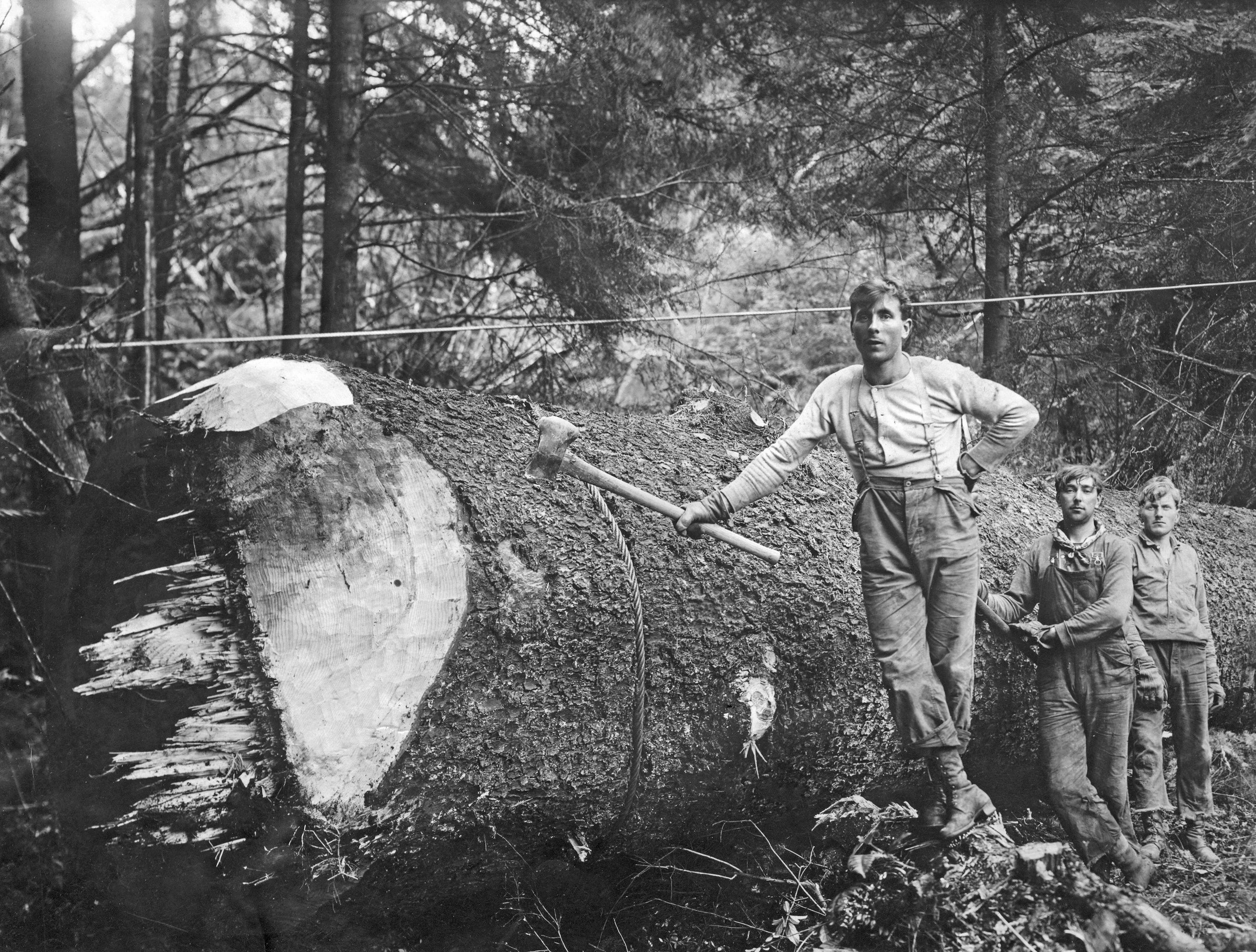
During the early 20th century, logging was the undisputed economic backbone of Humboldt County. The mascot paid direct homage to the rugged timber workers harvesting the expansive old-growth forests of the Pacific Northwest
Mascot Evolution Timeline
Newspaper Named
The student publication adopts the name The Lumberjack, establishing the foundational timber branding seven years before athletic adoption.
Institutional Pivot
The institution shifts from a basic teachers college to Humboldt State College, paving the way for expanded campus systems and a formalized sports department.
Official Adoption
The student body holds a definitive campus-wide vote, permanently electing the Lumberjack as the official mascot for all competitive university athletic programs.
Critical Controversies and Student Votes
As Cal Poly Humboldt shifted toward a curriculum heavily focused on environmental stewardship, sustainability, and natural resources, the Lumberjack mascot became a lightning rod for debate.
Critics argue the icon celebrates the environmental degradation of California’s historic old-growth redwoods, of which only 5% remain. Furthermore, academic and student analyses highlight how the caricature reinforces settler-colonial narratives and westward expansion mythologies akin to Paul Bunyan.
Mascot Retention & Controversy Timeline
Early Student Activism Blocks
Initial student-led initiatives attempt to phase out the mascot. These movements gained traction due to shifting socio-environmental stances regarding logging within the Pacific Northwest region.
"Ax the Jack" Student Referendum
Activists formally propose replacing the Lumberjack with the marbled murrelet, a rare seabird nesting in old-growth redwoods. Backed by massive alumni pushback, the student body decisively rejected the change, with 77% voting to retain Lucky.
Polytechnic Rebranding Assessment
The university achieves formal polytechnic designation, transitioning to Cal Poly Humboldt. External brand consultations reveal strong community interest in alternative mascots, but leadership confirms no immediate plans to retire Lucky without overwhelming consensus.
Modern Presence and Traditions
Despite the ongoing cultural friction, Lucky the Lumberjack remains highly visible across university athletics, campus life, and merchandise.
The Redwood Bowl: Lucky frequently appears at major athletic events to rally crowds from the sidelines of the iconic stadium.
Campus Lore: A cardboard cutout and imagery of Lucky greeting prospective students remain active staples at the university bookstore.
Logging Sports: The university maintains a celebrated, hands-on Logging Sports Team where students actively train in historical chopping, climbing, and equipment safety.